The Complete History Of Chat Lines in America
Chat lines were popular in the United States for a long time.
And right now, they are just as popular.
The growth of call-to-call dating has evolved quite a bit over the last few decades.
From the surface, telephone chat lines connected millions of strangers by voice across four decades, generating billions of dollars, reshaping American dating culture, and pioneering the social networking model that the internet would later claim as its own.
Born from deregulation, turbo-charged by late-night television, and nearly killed by the internet, these services served as a critical bridge between newspaper personal ads and Tinder - and, remarkably, some still operate today.
This article traces the complete history, from the first shared telephone circuits of 1878 to the AI-powered voice dating apps of our time.
Chat Lines by The Numbers
Peak industry revenue (900 numbers)
Active 900 numbers at peak
American TelNet single-night revenue
Teligence employees at peak
QuestChat cities served
Livelinks cities served
FonoChat cities covered
DestinyDial MAU growth (Q/Q)
Dating app user burnout rate
Chapter 1: Party Lines Planted the Seeds
Long before anyone dialed a 1-900 number to meet a stranger, Americans were already using the telephone as a social technology in ways its inventors never intended.
The story of chat lines begins with the party line — a shared telephone circuit connecting multiple households to a single physical wire.
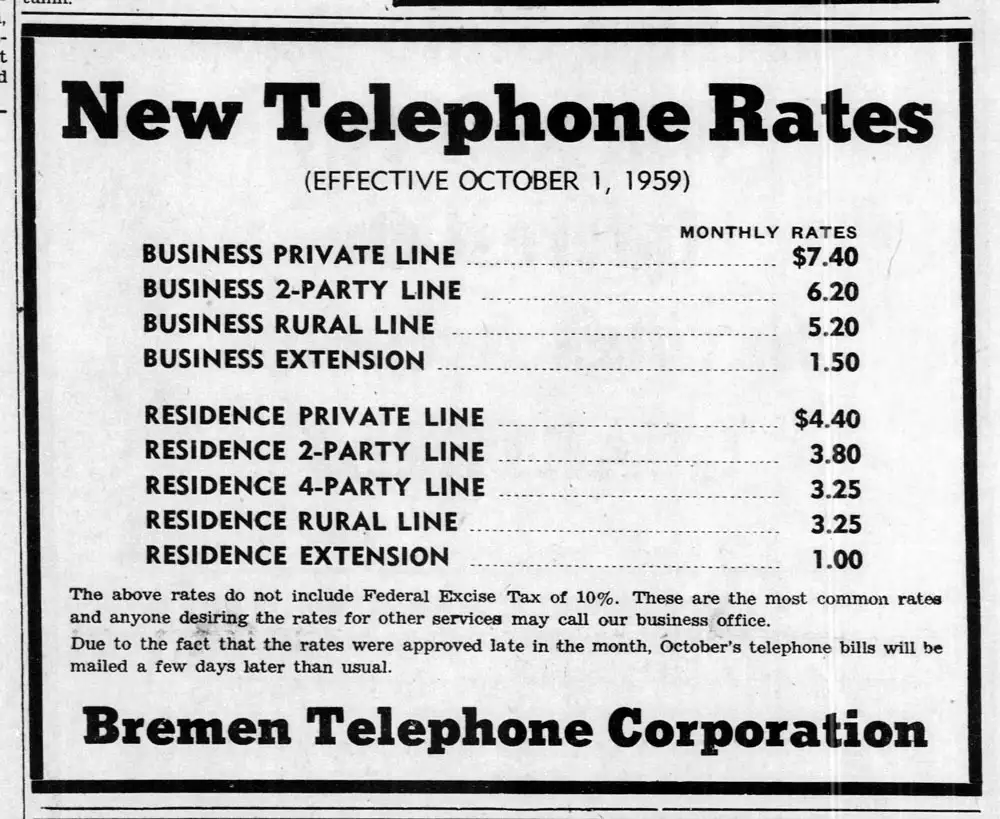
Party lines date to 1878, the year the first commercial telephone switchboards appeared, and for the next century they defined the American telephone experience.
By 1930, fully 63 percent of residential Bell System customers shared a party line.
At their peak around 1950, three-quarters of Bell’s residential subscribers (roughly 11 million people) were on shared circuits.
Each household had a distinctive ring pattern (two short rings and one long, for example), but the temptation to quietly lift the receiver and listen in on a neighbor’s conversation proved irresistible.
The cultural significance of party lines was substantial enough that the Bell System produced an etiquette film called Party Lines in 1946. The film featured marionettes by puppeteer Bill Baird to demonstrate proper shared-line behavior.

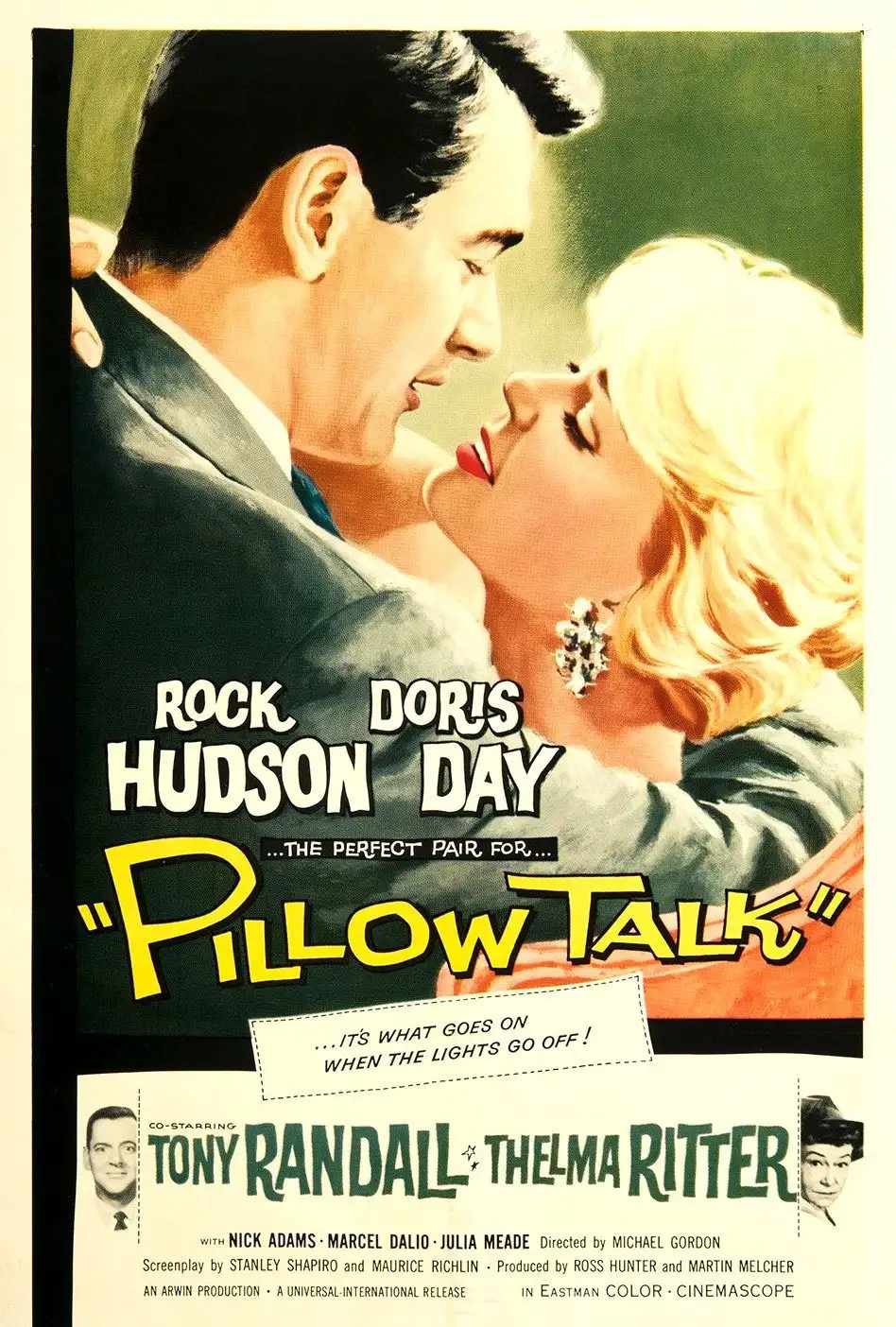
Hollywood noticed too - the 1959 Doris Day and Rock Hudson romantic comedy Pillow Talk built its entire premise around two singles forced to share a party line, establishing a template for technology-mediated flirtation that chat lines would later industrialize.
THE DECLINE OF PARTY LINES IN AMERICA
| Year | Event | Impact |
|---|---|---|
| 1878 | First commercial switchboards appear | Party lines become standard infrastructure |
| 1930 | 63% of Bell customers on shared lines | Peak adoption begins |
| ~1950 | 75% of Bell residential subscribers share lines | 11 million households on party lines |
| 1971 | Southern Bell plans NC elimination | Phase-out accelerates |
| 1984 | AT&T breakup | New digital switching makes private lines affordable |
| 2000 | ~5,000 party lines remain (USA Today) | Near extinction |
| 2002 | Last known party lines discontinued (Michigan) | End of an era |
AT&T, incorporated in 1885 as a subsidiary of Alexander Graham Bell’s American Bell Telephone Company, controlled the world as a regulated monopoly.
By the 1970s, it was the largest company on Earth, employing over one million people and controlling more than 85 percent of local telephone services.
Consumers were even required to rent their phones from AT&T, paying $1.50 to $5 per month for the privilege of using hardware on Ma Bell’s network.
Chapter 2: Deregulation, Options, and the 976 Explosion
The birth of the modern chat line industry required two catalysts: technological infrastructure and regulatory freedom.
Both arrived in the 1980s.
The 900 Number Is Born
Area code 900 was installed in 1971 as a “choke exchange” designed to prevent simultaneous callers from overwhelming long-distance networks.
Its first notable use came in March 1977, when the “Ask President Carter” program invited Americans to call a 900 number.
In 1980, AT&T restructured the 900 prefix as a premium-rate code, where callers paid above-normal per-minute charges.
Meanwhile, a parallel system of 976 numbers (local premium-rate prefixes) had been quietly operating since the early 1970s for mundane services like weather forecasts and sports scores.
In the early 1980s, entrepreneurs discovered these local numbers could deliver something far more lucrative than temperature readings.
Gloria Leonard and the Dawn of Dial-a-Porn
Gloria Leonard, editor and publisher of High Society magazine, is widely credited as one of the key pioneers of the phone dating industry.

In the early 1980s, she suggested the magazine purchase one of New York’s available “dial-it” 976 numbers for promotional purposes.
She recorded the first message herself in a sultry voice. For every seven-cent call, the phone company collected five cents and High Society received two cents. Some days, phone company revenue from the line alone reached $25,000.
In 1983, the FCC confirmed that no existing federal law prohibited phone chats, and the industry ignited. By 1985, dial-a-porn services in New York City alone were receiving six to seven million calls per month.
The 1987 Gold Rush
The breakthrough year was 1987, when AT&T opened the 900 program to any entrepreneur willing to provide content.
Before this, only 44 numbers with the 900 prefix existed during beta testing. Suddenly, virtually anyone could buy a premium-rate number and start charging callers.
The January 1, 1984 breakup of AT&T - the result of a Department of Justice antitrust suit filed in 1974 - was the crucial structural enabler.
The dismantling of Ma Bell into seven Regional Bell Operating Companies (“Baby Bells”) created space for entrepreneurial innovation in telecommunications services.
The Teen Party Line Craze
The mid-1980s witnessed the explosion of teen party lines - group bridging services that functioned as voice-based chat rooms.
Numbers like 550-TEEN allowed teenagers to dial into group calls where strangers talked simultaneously.
Pacific Bell in California refunded $8.8 million in 1987 to customers for party-line billing adjustments, and one Oakland boy accumulated a bill of $4,168.39.
“Virtually anyone with a few hundred dollars lying around could buy up a local number, advertise it, and if it caught on, start raking in cash.”
Stephanie Buck, Medium/Timeline
Chapter 3: The Billion-Dollar Golden Age (1988–1996)
The late 1980s through the mid-1990s represented the golden age of the chat line industry - a period of explosive growth, massive revenues, and cultural ubiquity that would make phone chat lines as much a fixture of American life as infomercials and cable television.
900-NUMBER INDUSTRY REVENUE GROWTH
| Year | Estimated Revenue | Growth Notes |
|---|---|---|
| 1988 | $60 million | Early stage — limited 900 numbers in service |
| 1989 | ~$200 million | Rapid adoption after AT&T opens 900 program |
| 1990 | ~$500 million | Industry doubles as cable TV ads proliferate |
| 1991 | ~$975 million | Nearly $1 billion — approaching peak |
| 1992 | ~$3 billion (all 900 services) | Peak year; 10,000+ active 900 numbers |
| 1993 | $550 million (post-regulation crash) | TDDRA and carrier exit devastate revenue |
| 1996 | Declining — internet competition begins | AOL reaches 6 million subscribers |
| 2002 | Minimal | AT&T exits 900-number business entirely |
| 2012 | Near zero (900 numbers) | Verizon discontinues last 900 service |
The Major Players
Teligence (founded 1990, Vancouver, BC) grew from a single chat line into a $100-million-plus enterprise with 450 employees at peak. Its portfolio included Livelinks (flagship, 1,500+ cities), RedHot Dateline (adult-oriented), Interactive Male (gay/bisexual men), Lavender Line (lesbians), Vibeline (Black singles), and FonoChat (Latino singles).
QuestChat (founded 1988, White Plains, NY) established itself as "North America's busiest phone chat line." American TelNet (ATN) grossed over $2 billion over its lifetime from a converted Toys "R" Us warehouse in Miami, where up to 600 operators worked the phones. On a single busy night, ATN could pull in more than $1 million.
MyMobileLine, one of the most trusted independent chat line brands for general singles in the US and Canada, built its reputation on a mobile-first approach - allowing paid members to use their membership from any phone, anywhere. With local numbers across major US cities and a generous free trial for first-time male callers, MyMobileLine carved out a loyal following among singles who preferred the simplicity of dialing a local number over downloading an app.
YummyVibe, proudly serving users for over 25 years, has established itself as the premier Black chat line in North America. Based in Las Vegas, it offered a dedicated space where Black voices were celebrated, and cultural connection was prioritized, while welcoming anyone who valued authentic conversation. YummyVibe's 30-minute free trial and zero-cost access for women made it one of the most accessible entry points in the industry.
Beyond these anchor brands, a growing constellation of niche and regional chat lines emerged to serve every community and interest:
| Chat Line | Phone | Category | Status |
|---|---|---|---|
|
MyMobileLine
|
MyMobileLine.com
|
General singles — mobile-first, local numbers nationwide | Active |
|
NightConnect
|
NightConnect.com
|
General singles — evening/late-night callers | Active |
|
Livelinks
|
Livelinks.com
|
General singles (1,500+ cities) | Active |
|
Nightline
|
NightlineChat.com
|
General singles | Active |
|
DarkHourChat
|
DarkHourChat.com
|
Late-night adult chat and flirtation | Active |
|
DialPride
|
DialPride.com
|
LGBTQ+ community — inclusive voice dating | Active |
|
FlirtSwitch
|
FlirtSwitch.com
|
Flirty conversations and casual dating | Active |
|
YummyVibe
|
YummyVibe.com
|
Black singles — 25+ years, cultural community focus | Active |
|
Interactive Male
|
InteractiveMale.com
|
Gay & bisexual men | Active |
|
PrideVoices
|
PrideVoices.com
|
LGBTQ+ community — pride-centered connections | Active |
|
UrbanChatLines
|
UrbanChatLines.com
|
Urban singles — Black and multicultural communities | Active |
|
LavaLatino
|
LavaLatino.com
|
Latino singles — Spanish-language voice dating | Active |
|
FonoChat
|
FonoChatLatino.com
|
Latino/Latina singles (bilingual, 1,300+ cities) | Active |
|
PrideLineChat
|
PrideLineChat.com
|
LGBTQ+ community — dedicated pride chat line | Active |
|
LatinoVoices
|
LatinoVoices.com
|
Latino community — bilingual chat connections | Active |
|
Lavender Line
|
—
|
Lesbian community | Active |
|
GuySpy Voice
|
GuySPYVoice.com
|
Gay men (25+ years running) | Active |
|
Vibeline
|
Vibeline.com
|
Black singles | Active |
|
MegaMates
|
MegaMatesChat.com
|
African American community (75+ metros) | Active |
|
YummyChats
|
YummyChats.com
|
Black singles — casual and social conversations | Active |
|
DestinyDial
|
DestinyDial.com
|
General singles — NYC-based, +53% MAU growth in 2024 | Active |
|
SoulLinkUp
|
SoulLinkUp.com
|
Singles seeking deeper, meaningful voice connections | Active |
|
TrueVoiceDial
|
TrueVoiceDial.com
|
Authentic voice dating — personality-first matching | Active |
|
LiveLineDial
|
LiveLineDial.com
|
Live voice connections — real-time matching | Active |
|
VoxCrush
|
VoxCrush.com
|
Modern voice dating — fresh brand for new callers | Active |
The business model that emerged became universal and remarkably durable: women always chatted for free (to attract female callers and create the user base).
On the other hand, men paid per minute - typically $1.99 for the first minute and $0.99 for each additional, with the average call lasting about 3.5 minutes and costing roughly $5.
Revenue was split between the telephone carrier and the service provider, with phone companies taking commissions of up to 45 percent.
Late-Night TV Marketing in Chat Lines
Chatline commercials became a defining feature of late-night television throughout the 1990s and 2000s.
Anyone who watched TV after 10 PM during this era encountered an inescapable parade of Livelinks, QuestChat, and Nightline ads - typically featuring attractive women lounging by telephones while saxophone music played, inviting viewers to call a prominently displayed number.
The ads were so ubiquitous and formulaic that they spawned parodies including a “Celebrity Chat Line” segment on The Late Show with Stephen Colbert featuring Bryan Cranston and Whoopi Goldberg.
One notable fact: actress Evangeline Lilly, before starring in Lost, appeared in a Livelinks commercial produced by Teligence in Vancouver - an early career step she likely preferred to forget.
Chat lines permeated broader pop culture too. Spike Lee's 1996 film Girl 6 centred its entire plot on a phone sex operator, and a 1994 Seinfeld episode "The Stall" built its premise around a 1-900 call.
Chapter 4: How the Calls Actually Connected
The technical infrastructure powering chat lines was a sophisticated layering of telephony technologies that most callers never considered.
CHAT LINE CALL FLOW: FROM DIAL TO CONNECTION
| Step | Component | Function |
|---|---|---|
| 1 | Caller dials 900/local number | Call enters Public Switched Telephone Network (PSTN) |
| 2 | Long-distance carrier routes call | AT&T, MCI, or Sprint recognize premium prefix |
| 3 | IVR (Interactive Voice Response) | Plays disclosure preamble, sorts by gender/location |
| 4 | Audio Conference Bridge | Party lines: mixes audio for group chat rooms |
| 5 | PBX Switch | One-on-one: routes matched callers to private connection |
| 6 | Greeting Mailbox System | Callers record/browse voice profiles via keypad |
| 7 | Billing Integration | Per-minute charges appended to caller’s phone bill |
After 1993, the IVR was legally required to play a preamble disclosing the provider’s name, cost per minute, and service description, giving callers three seconds to hang up without charge.
For party-line services, callers were connected via audio conference bridges - servers that could answer multiple calls simultaneously, mixing the audio of all participants into shared sessions.
For one-on-one dating services like Livelinks and QuestChat, callers recorded a voice greeting, browsed others’ greetings using keypad navigation, and could send private messages or request live connections.
At American TelNet, tech chief Michael Self built a groundbreaking system that could route incoming 1-900 calls not only to physical phone rooms but to operators working from their homes - a remarkable feat of distributed computing for the early 1990s.
Chapter 5: AOL, Match.com, and the Internet’s Slow Conquest
The internet did not kill chat lines.
But it impacted their popularity for a while.
AOL peaked at 17 million subscribers in 1999, and its chat rooms replicated much of what party-line chat services offered, but for free.
AOL Instant Messenger (AIM), launched in May 1997, became the dominant communication tool for teenagers between 1999 and 2005.
Match.com launched in 1995, creating structured online dating platforms that replicated the personals-browsing function of chat lines with photographs and detailed profiles.
AT&T formally exited the 900-number business in 2002. Verizon, the last carrier supporting 900 numbers, discontinued the service in December 2012, marking the official end of the 900-number era.
Chatline companies adapted by shifting to local phone numbers with free trials and credit card billing for minute packages.
QuestChat launched a mobile dating app in 2014 for iOS and Android. Teligence repositioned itself as a “voice-enabled social networking” company.
Chapter 6: Why Chat Lines Still Exist in the Age of Tinder
Against all odds, telephone chat lines have not disappeared.
MyMobileLine, Livelinks, NightConnect, FonoChat, and others continue to operate, and some are experiencing their strongest growth in years.
THE DATING APP FATIGUE CRISIS
| Metric | Value | Source |
|---|---|---|
| Tinder download decline since 2014 | −33% | InsideHook / App Annie |
| Match Group paying user decline (Q3 2024) | −3% | Match Group earnings report |
| Bumble share price drop (Aug 2024) | ~−30% | Bumble investor reporting |
| Global dating app download decline (Q3 2024) | −9% | Sensor Tower / industry data |
| US dating app download decline (Q3 2024) | −14% | Sensor Tower / industry data |
| Users reporting dating app burnout | 78% | Forbes Health survey 2024 |
| Gen Z reporting emotional exhaustion from apps | 79% | Forbes Health survey 2024 |
| DestinyDial MAU growth (quarter-over-quarter) | +53% | Global Dating Insights |
| DestinyDial new registrations growth | +24% | Global Dating Insights |
| DestinyDial monthly organic users | ~180,000 | Global Dating Insights |
Into this vacuum, voice-based dating is experiencing a genuine resurgence. DestinyDial, a New York-based chat line, reported its strongest growth period in over 20 years.
New voice-first dating apps are emerging: Known, an AI-powered voice dating service, found that 80 percent of voice-based introductions led to physical dates in its San Francisco test market.
Chat lines retain structural advantages over dating apps. They require no photographs, no detailed profiles, and no digital footprint - only a phone.
Chapter 7: Chat Lines as Lifelines for Marginalized Communities
One of the most significant and least discussed aspects of chat line history is the role these services played for communities that mainstream dating culture poorly served.
LGBTQ+ Communities
For LGBTQ+ Americans, phone chat lines provided an anonymous connection during an era of legal discrimination, social stigma, and the AIDS crisis.
Services like PrideLineChat, PrideVoices, Interactive Male, and GuySpy Voice (operating for more than 25 years) offered spaces where people could explore their identities without visual exposure or the risk of being seen entering a gay bar.
The transition from gay phone chat to gay online dating was direct and deliberate.
Black and Latino Communities
Vibeline (founded in 1990) became the premier chat line for Black singles in North America.
This was soon followed by YummyVibe in 2005, which grew into the largest North American phone chatline for black singles.
On the other hand, LavaLatino and LatinoVoices, which are built for Hispanic singles, cover over 1,300 cities and support bilingual English-Spanish interactions.
CHAT LINES SERVING SPECIFIC COMMUNITIES
| Community | Key Brands |
|---|---|
| LGBTQ+ | DialPride, PrideVoices, PrideLineChat, Interactive Male, GuySpy Voice, Lavender Line |
| Black singles | YummyVibe, YummyChats, UrbanChatLines, Vibeline, MegaMates |
| Latino singles | LavaLatino, LatinoVoices, FonoChat |
| General singles | MyMobileLine, NightConnect, DestinyDial, LiveLineDial, SoulLinkUp, TrueVoiceDial, VoxCrush, Livelinks, QuestChat, Nightline |
| Flirty / casual | FlirtSwitch, DarkHourChat, RedHot Dateline |
Chapter 8: Chat Lines Today: A Directory of Active Services
The chat line landscape of today looks nothing like the 900-number boom of 1992.
But yet it is more diverse, more accessible, and in many corners, more active than it has ever been.
The consolidation of the Teligence era gave way to a fragmented but thriving ecosystem of independent brands, each carving out a specific audience, identity, and voice.
Where the golden age was dominated by a handful of large operators, today's market increasingly rewards specialization.
General Dating Chat Lines
The general singles category, which is the broadest and most competitive, has seen a quiet resurgence driven largely by dating app fatigue.
Callers who grew tired of curated profiles and algorithmic matching are returning to the simplicity of a phone call.
MyMobileLine built its reputation on a genuinely mobile-first approach, allowing paid members to use their membership from any phone, anywhere in the country.
With local numbers across major US cities and a free trial for first-time male callers, it carved out a loyal following among singles who prefer the directness of a voice conversation over the performance of a dating profile.
NightConnect serves the evening and late-night caller: a demographic that has always been the backbone of the chat line industry. Its focus on spontaneous, real-time connection has kept it relevant in an era where most social interaction has migrated to asynchronous messaging.
LGBTQ+ Chat Lines
The LGBTQ+ segment has maintained some of the most loyal user bases in the industry.
For many callers, the anonymity and voice-first nature of chat lines still offers something that visual apps like Grindr or HER cannot - connection without exposure.
PrideLineChat, DialPride, and PrideVoices serve the broader LGBTQ+ community with inclusive, pride-centered voice dating.
Interactive Male and GuySpy Voice the latter operating for over 25 years, continue to serve gay and bisexual men specifically. Lavender Line remains one of the only dedicated voice-dating spaces built for lesbian callers.
Black Chat Lines
The Black chat line segment has a rich independent history dating back to Vibeline's founding in 1990. That tradition continues today across several active brands.
YummyVibe, proudly serving callers for over 25 years and based in Las Vegas, has established itself as one of the premier Black chat lines in North America. Its 30-minute free trial and zero-cost access for women made it one of the most accessible entry points in the category. UrbanChatLines and YummyChats serve urban and multicultural singles with a community-first voice. Vibeline and MegaMates - operating in over 75 metropolitan areas - continue the legacy of dedicated Black voice-dating spaces.
Latino Chat Lines
The Latino segment is arguably the most geographically expansive in the industry. FonoChat, covering over 1,300 cities with bilingual English-Spanish support, remains the largest North American chat line for Hispanic singles.
LavaLatino and LatinoVoices serve the broader Latino community with bilingual connections, while LatinoVoices specifically focuses on authentic cultural connection for Spanish-speaking callers across the US.
Newer Voices
A new generation of brands has entered the market, targeting callers who may be discovering voice dating for the first time.
SoulLinkUp positions itself around deeper, more meaningful voice connections - a deliberate contrast to the swipe-and-match model.
TrueVoiceDial and VoxCrush bring a modern identity to the format, designed for callers who want the intimacy of voice without the baggage of legacy branding. DarkHourChat serves the late-night adult chat segment, continuing a tradition that stretches back to the earliest 976 services.
Where to Find Chat Lines?
For callers navigating this landscape, independent directories have become the most practical starting point.
Rather than calling numbers at random, directories like AmericaDialLine.com catalog active services, compare free trial offers, and match callers to the right service by community, location, and preference.
They are performing the same curation function that newspaper personal ad sections once did, and that early chat line IVR systems attempted to automate.
The infrastructure has changed. The billing model has changed. The cultural context has changed enormously.
But the fundamental proposition - that a stranger's voice can tell you more about them than any photograph or profile ever could - has remained constant across nearly five decades of American telephone history.
About AmericaDialLine.com
AmericaDialLine.com is an independent chat line directory serving the United States. We catalog, review, and compare the nation’s leading phone chat lines - from general dating services like Livelinks and QuestChat to community-specific platforms like Vibeline, FonoChat, and Interactive Male.
Our mission is to help Americans discover safe, reputable voice-dating services that match their interests, identity, and location.
Whether you’re new to chat lines or a longtime caller, AmericaDialLine.com is your trusted starting point. Visit us at AmericaDialLine.com.